
The History of the Bible: A Comprehensive Overview
Digital accessibility of the Bible, including PDF formats, has broadened its reach, while older manuscripts—like those in Old English—reveal evolving textual traditions.
Scholarly debates continue regarding its compilation, transmission, and origins, with AI offering new insights into ancient authorship and textual patterns.
Origins and Ancient Texts
The very foundations of the Biblical narrative rest upon a complex interplay of oral traditions, fragmented writings, and evolving cultural contexts stretching back millennia. Initially, these weren’t a unified “Bible” but rather a collection of diverse texts – myths, laws, poetry, prophecies – circulating amongst ancient Near Eastern civilizations.
Early textual evidence, predating standardized canons, reveals a fluid and dynamic process of composition and transmission. The discovery of ancient manuscripts, including those from the 1st century BC, provides invaluable glimpses into these formative stages. These texts, often written on papyrus or parchment, demonstrate variations and adaptations across different communities.
The emergence of the Septuagint, a Greek translation of the Hebrew scriptures, marked a pivotal moment, expanding the reach of these texts beyond their original linguistic and cultural boundaries. Simultaneously, the development of early PDF-like formats – though obviously not digital – involved meticulous hand-copying, introducing both preservation and potential for scribal errors.
Understanding these origins necessitates acknowledging the influence of surrounding cultures and the ongoing process of interpretation that shaped the Biblical texts as we know them today. The history of the Bible, even in its earliest forms, is a story of continuous evolution and adaptation.
The Development of the Old Testament Canon
The formation of the Old Testament canon wasn’t a singular event, but a protracted process spanning centuries, involving debate, selection, and ultimately, acceptance within Jewish communities. Initially, the “canon” – meaning a standard or rule – was less about a fixed list of books and more about the authority attributed to certain texts, like the Torah (the first five books).
Over time, the prophetic writings and the “Writings” (Psalms, Proverbs, etc.) gradually gained recognition, though the precise boundaries remained contested. The Septuagint, with its broader inclusion of certain texts, reflects a different canonical perspective than the Hebrew Bible. This highlights the diversity of views even in antiquity.
The advent of digital formats, including PDF versions of various Biblical translations, allows modern scholars to compare and contrast these different canonical traditions with unprecedented ease. Examining ancient manuscripts and early translations reveals the evolving criteria used to determine which texts were considered authoritative.
Ultimately, the canonization process was influenced by theological considerations, historical circumstances, and the perceived relevance of texts to the needs of the community. It represents a complex negotiation between tradition, authority, and evolving religious beliefs.

The Formation of the New Testament
The development of the New Testament canon differed significantly from that of the Old Testament. Emerging within the first few centuries CE, the writings initially circulated as letters, Gospels, and other documents among early Christian communities. There wasn’t an immediate consensus on which texts were authoritative.
Factors influencing inclusion included apostolic authorship (or association), consistency with established teachings, and widespread use in worship and communal life. Debates arose concerning texts like Hebrews, James, 2 Peter, and Revelation, with varying levels of acceptance across different regions.
Key milestones included lists compiled by figures like Athanasius of Alexandria in the 4th century, which closely resemble the modern New Testament. The process wasn’t finalized until later centuries, with regional variations persisting for some time.
Today, readily available PDF versions of various New Testament translations facilitate comparative study of early manuscript evidence and canonical debates. Digital accessibility allows researchers to trace the historical development of these texts and understand the complex process of canonization.
Early Manuscript Discoveries: The Dead Sea Scrolls
The discovery of the Dead Sea Scrolls in the mid-20th century revolutionized biblical studies. Found in caves near Qumran, these ancient manuscripts—dating back to the 1st century BC and the 1st century CE—include fragments from nearly every book of the Old Testament, predating previously known Hebrew texts by centuries.
Significantly, the scrolls offer invaluable insights into the textual transmission of the Hebrew Bible, revealing variations and confirming the remarkable accuracy of later copies. They also shed light on the religious and social context of Judaism during the Second Temple period.
The scrolls aren’t limited to biblical texts; they also contain sectarian writings, offering a glimpse into the beliefs and practices of the Qumran community, often associated with the Essenes. These non-biblical texts provide crucial context for understanding the world in which early Christianity emerged.
Digitized versions of the Dead Sea Scrolls, often available as PDFs, allow scholars and the public alike to access and study these fragile artifacts, furthering our understanding of biblical history and textual development.
The Septuagint and Greek Translations
The Septuagint (LXX), a Greek translation of the Hebrew Bible, holds immense significance in biblical history. Tradition states it was commissioned in the 3rd century BC by Ptolemy II Philadelphus, the ruler of Egypt, to include the Hebrew scriptures in the Library of Alexandria. This translation wasn’t a single event, but a gradual process over several decades.
Crucially, the Septuagint became the primary Old Testament text for many early Christians, as Greek was the common language of the Eastern Roman Empire. It influenced the New Testament writers, with numerous quotations and allusions drawn from the Septuagint rather than the original Hebrew.
Beyond the Septuagint, other Greek translations and revisions emerged, including those by Aquila, Symmachus, and Theodotion, offering alternative renderings of the Hebrew text. These versions aided scholars in textual criticism and understanding variations in the biblical text.
Today, digital resources, including PDFs of the Septuagint and related Greek translations, are readily available, facilitating comparative study and deepening our comprehension of the Bible’s textual evolution.
The Role of Early Church Fathers
The Early Church Fathers played a pivotal role in preserving, interpreting, and disseminating the biblical text. Figures like Irenaeus, Tertullian, Origen, and Jerome were instrumental in establishing the canon – the definitive list of books accepted as scripture. Their writings, often available today in PDF format for scholarly access, provide invaluable insights into the beliefs and practices of the early Christian community.
These theologians engaged in extensive textual criticism, comparing various manuscripts and translations to identify the most accurate readings. Jerome’s Latin Vulgate translation, completed in the early 5th century, became the standard Bible for the Western Church for centuries, profoundly impacting its theological development.
Furthermore, the Church Fathers defended the scriptures against emerging heresies, offering interpretations that solidified orthodox doctrine. Their commentaries and homilies demonstrate a deep engagement with the biblical text, shaping its understanding for generations. Access to digitized collections of their works, often in searchable PDFs, is crucial for modern biblical scholarship.
Historiography of the Bible: Methods and Approaches
Historiography, the study of how history is written, significantly impacts our understanding of the Bible. Approaches vary; some scholars prioritize source criticism, analyzing the textual origins and layers of composition. Others employ form criticism, examining literary genres and their historical settings. Redaction criticism focuses on how editors shaped the biblical narratives, revealing theological agendas.
Modern historiography increasingly incorporates archaeological evidence and comparative ancient Near Eastern studies, providing contextual insights. Digital resources, including extensive PDF archives of scholarly articles and primary source translations, are vital for this research. These resources facilitate comparative analysis of biblical texts with contemporaneous historical records.

The term itself can be interpreted differently, encompassing both the act of writing history and the underlying philosophical assumptions guiding that process. Accessing digitized historical analyses, often available as downloadable PDF documents, allows researchers to trace the evolution of biblical interpretation and understand its complex relationship with historical context.
Textual Criticism and Establishing the Biblical Text
Textual criticism is the scholarly discipline dedicated to reconstructing the most accurate possible version of the biblical text. It involves comparing numerous ancient manuscripts – including fragments discovered amongst the Dead Sea Scrolls and early Greek translations like the Septuagint – to identify variations and determine the original wording.
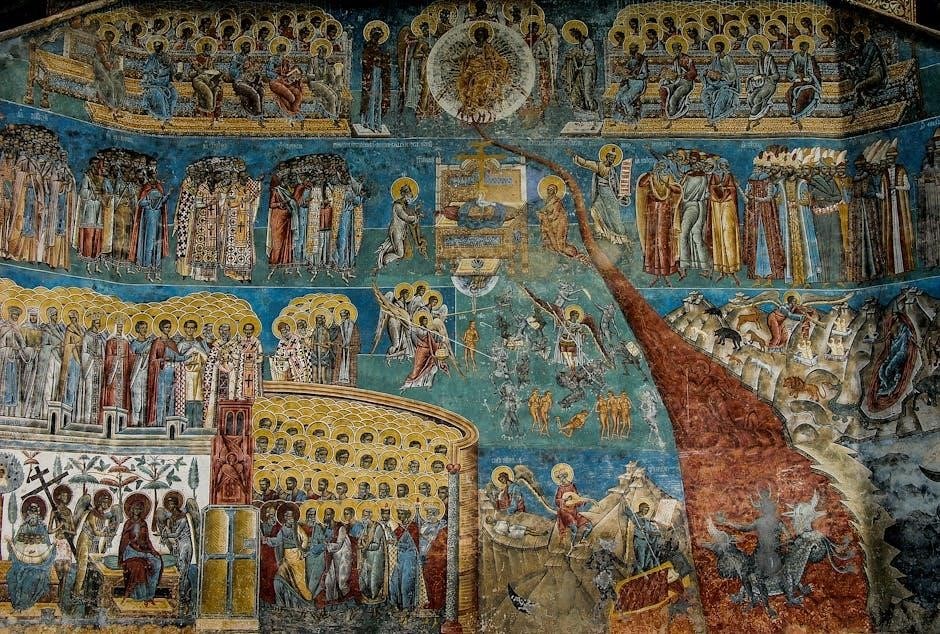
Scholars meticulously analyze these differences, considering factors like manuscript age, geographical origin, and textual families. The goal isn’t to find a single “perfect” text, but to establish a reliable text based on the weight of evidence. Digitized manuscripts, often accessible as PDFs, are crucial for this comparative work.
Modern approaches leverage computational tools to analyze vast quantities of textual data, identifying patterns and potential errors. Access to comprehensive PDF collections of manuscript transcriptions and critical apparatuses significantly accelerates this process, allowing for more nuanced and informed textual reconstructions. The ongoing discovery of older manuscripts continually refines our understanding.
Dating the Biblical Texts: Historical and Archaeological Evidence
Establishing the dates of biblical texts relies on a combination of historical and archaeological evidence. While the Bible itself doesn’t always provide precise dates, external sources and scientific methods offer valuable clues. Archaeological discoveries, such as inscriptions and artifacts, can corroborate biblical narratives and provide a chronological framework.
Historical analysis examines the political and cultural contexts of the time, comparing biblical accounts with contemporary records from other civilizations. Manuscript evidence, including fragments found in the Dead Sea Scrolls dating back to the 1st century BC, provides crucial information about the evolution of the text.
Digital resources, often available as PDFs, compile and analyze this evidence, presenting scholarly interpretations of dating methodologies. Radiocarbon dating and paleography (the study of ancient handwriting) also contribute to establishing timelines. Access to these digitized resources is vital for ongoing research and debate surrounding the biblical texts’ chronology.
The Impact of Artificial Intelligence on Biblical Studies
Artificial Intelligence (AI) is rapidly transforming Biblical studies, offering new tools for analysis and interpretation. AI-powered algorithms can analyze vast quantities of textual data, identifying patterns and relationships previously unseen by human scholars. This includes uncovering hidden fingerprints within the Old Testament texts, challenging traditional understandings of their origins.
Computer-assisted analysis, often accessible through PDF-based research compilations, is being used for authorship attribution, attempting to determine who wrote and redacted the Bible some 2,800 years ago. Word-frequency analysis, a key AI technique, helps identify stylistic markers and potential authors.
Furthermore, AI aids in textual criticism, comparing different manuscript versions to reconstruct the most accurate original text. While AI doesn’t replace human scholarship, it provides powerful new methods for exploring the complexities of the Bible and its historical context, enhancing accessibility to research findings.
Authorship Attribution: Computer-Assisted Analysis
Computer-assisted analysis is revolutionizing the study of Biblical authorship, moving beyond traditional historical and literary methods. A pioneering approach utilizes word-frequency analysis, employing algorithms to identify stylistic fingerprints within the Biblical texts. This technique, often applied to digitized versions like PDFs of ancient manuscripts, seeks to discern patterns indicative of specific authors or editorial hands.
Israeli and international scholars are at the forefront of this research, aiming to determine who wrote and redacted the Bible approximately 2,800 years ago. The analysis focuses on subtle linguistic features, such as preferred vocabulary and sentence structure, to differentiate between potential authors.
While definitive conclusions remain elusive, this method offers a novel perspective on the Bible’s composition. Access to digitized texts, including comprehensive PDF collections of Old Testament books, is crucial for enabling these large-scale computational analyses, furthering our understanding of the Biblical narrative’s origins.
The Bible in the First Century BC
The First Century BC represents a pivotal period in the development of the Biblical text, preceding the emergence of Christianity. Crucially, this era witnessed the existence of texts remarkably similar to those found in later canonical versions. The discovery of ancient manuscripts, often now accessible in digitized PDF formats, provides invaluable insight into the state of the Biblical canon at this time.
Remarkably, complete copies of Old Testament books dating back to the 1st century BC were unearthed, offering a glimpse into the textual landscape before the Common Era. Scholars have noted the striking consistency between these early texts and subsequent versions, indicating a relatively stable textual tradition.
Studying these ancient PDF representations allows for detailed comparative analysis, revealing the evolution—or lack thereof—of the Biblical narrative during this formative period. This era laid the groundwork for the Bible as we know it today, making its study essential for understanding its historical trajectory.
Old English Biblical Texts
The survival of Old English Biblical texts offers a fascinating window into the reception and translation of scripture in Anglo-Saxon England. While complete Bibles in Old English were rare, significant portions survived, often preserved in digitized PDF formats accessible to modern scholars. These fragments reveal the evolving linguistic landscape and theological interpretations of the period.

Among the texts surviving in Old English are portions of the first seven books of the Old Testament, alongside translations of Proverbs and Ecclesiasticus. These translations weren’t undertaken in isolation; they reflect a broader engagement with existing Latin versions and Greek sources, now readily available as searchable PDF documents.
The study of these Old English Biblical fragments, often through digital PDF archives, allows researchers to trace the development of English prose and the adaptation of Biblical narratives to a new cultural context. They represent a crucial step in the long history of the Bible’s translation and dissemination.

Phyllis Trible and Feminist Biblical Scholarship
Phyllis Trible’s groundbreaking work revolutionized Biblical scholarship, particularly through a feminist lens. Her analyses challenged traditional interpretations, focusing on the portrayal of women within Biblical narratives and exposing patriarchal biases often overlooked in conventional readings. Access to digitized Biblical texts, including searchable PDF versions, facilitated this critical re-examination.

Trible’s influence extended to generations of scholars and students, prompting a re-evaluation of hermeneutical approaches. She demonstrated how the Bible, while historically significant, was also a product of its time, reflecting societal norms that often marginalized women. Her publications, now widely available in PDF format, remain essential reading.
Her passing earlier this month, just shy of her 93rd birthday, marks the loss of a pivotal figure. Trible’s legacy continues to inspire critical engagement with scripture, encouraging a more inclusive and nuanced understanding of the Bible’s complex history and its impact on gender roles, often explored through detailed textual analysis in accessible PDF studies.
The Darkness at Jesus’ Death: Historical Context
The Biblical account of darkness falling upon the land during Jesus’ crucifixion has sparked centuries of debate. While Scripture doesn’t provide a precise date, historical research, aided by digitized Biblical texts in PDF format, explores potential natural explanations alongside theological interpretations. Some scholars suggest a possible solar eclipse, though its timing and duration are debated.
Others propose a severe dust storm or unusual atmospheric conditions as plausible causes, referencing historical records of similar events in the region. Access to ancient texts and archaeological findings, often available as downloadable PDFs, allows for cross-referencing with contemporary accounts. Examining these sources provides a broader historical context.
The narrative’s significance extends beyond a literal event; it symbolizes the profound spiritual darkness accompanying Jesus’ death. Modern Biblical scholarship, readily accessible through online PDF resources, continues to investigate the historical and cultural factors influencing this dramatic depiction, enriching our understanding of the event’s multifaceted meaning.

PDF Formats and Digital Accessibility of the Bible
The proliferation of Bible translations and scholarly works in PDF format has revolutionized access to this foundational text. Digitization efforts have made historical manuscripts, commentaries, and linguistic analyses readily available to a global audience, fostering wider engagement with Biblical studies. Previously restricted to libraries and academic institutions, these resources are now accessible via the internet.
PDFs facilitate searching, annotation, and cross-referencing, enhancing research capabilities for scholars and enthusiasts alike. The availability of multiple translations in PDF allows for comparative study, revealing nuances in interpretation and textual variations. Furthermore, digital formats improve accessibility for individuals with visual impairments through screen readers and adjustable font sizes.
However, ensuring long-term preservation and consistent rendering of PDFs remains a challenge. Ongoing efforts focus on creating accessible PDFs compliant with accessibility standards, guaranteeing equitable access to the Bible for all users, regardless of ability or location.