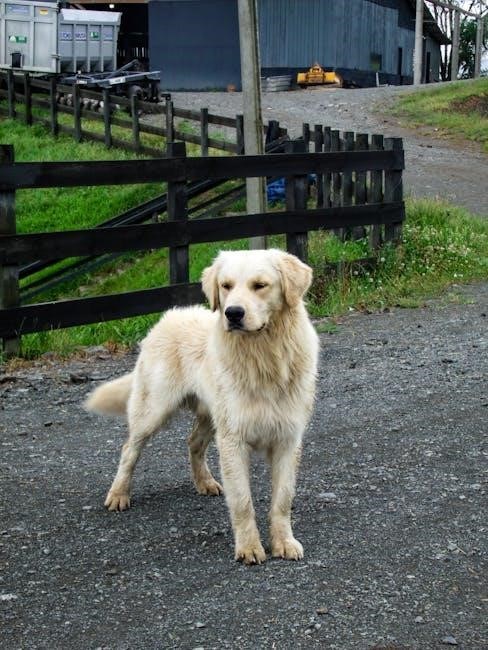
Extreme Dog Fence systems offer a reliable solution for containing your pet‚ providing freedom while ensuring safety within defined boundaries. These innovative systems utilize radio frequency technology‚ offering a humane and effective alternative to traditional fencing methods.
What is an Extreme Dog Fence?
An Extreme Dog Fence is an electronic containment system designed to keep your dog safely within designated areas without the need for physical barriers like walls or traditional fences. It’s a popular choice for pet owners seeking a cost-effective and aesthetically pleasing solution for pet containment. The system fundamentally works by establishing a boundary using a buried wire connected to a transmitter.
A collar receiver‚ worn by your dog‚ detects a radio signal emitted from the transmitter when approaching the boundary wire. This triggers a safe‚ yet noticeable‚ correction – a tone‚ vibration‚ or static stimulation – deterring the dog from crossing the set limit. These systems are customizable‚ allowing you to adjust the correction levels to suit your dog’s temperament and sensitivity‚ ensuring a comfortable and effective training experience.
Benefits of Using an Extreme Dog Fence
Employing an Extreme Dog Fence system delivers numerous advantages for both pets and their owners. A primary benefit is the freedom it grants your dog to roam safely within the established boundaries‚ eliminating the constraints of a physical fence; This is particularly valuable for properties with challenging terrain or where traditional fencing isn’t feasible.
Furthermore‚ these systems are often more affordable than installing conventional fencing‚ and they don’t obstruct views. They offer a humane training method‚ utilizing adjustable correction levels to gently guide your dog. The system promotes a sense of security‚ knowing your pet is contained safely. It also reduces the risk of your dog wandering and encountering hazards‚ contributing to their overall well-being and peace of mind for you;
System Components and Overview
Extreme Dog Fence systems comprise a transmitter‚ collar receiver‚ and boundary wire‚ working harmoniously to create a safe and customizable containment area for your canine companion.
Transmitter Unit – Functionality and Placement
The transmitter unit serves as the central control hub of your Extreme Dog Fence system. Its primary function is to send a radio frequency signal along the buried boundary wire‚ creating a safe zone for your dog. Proper placement is crucial for optimal performance; ideally‚ position the transmitter indoors‚ in a dry location‚ and away from large metal objects that could cause interference.
Ensure the unit is plugged into a functioning electrical outlet‚ preferably a GFI outlet for added safety. The transmitter allows you to adjust the signal field width and correction levels‚ customizing the system to your dog’s needs and temperament. Regularly check the transmitter for any beeping sounds‚ as this often indicates a wire break or other system issue requiring attention. A properly functioning transmitter is the foundation of a reliable containment system.
Collar Receiver – Features and Safety
The collar receiver is worn by your dog and delivers a safe‚ yet noticeable‚ correction when they approach the boundary wire. Key features include adjustable correction levels‚ allowing for customization based on your dog’s sensitivity‚ and contact point options to suit different coat types. Ensuring a proper fit is paramount; the collar should be snug enough to maintain consistent contact between the contact points and your dog’s skin‚ but not so tight as to cause discomfort.
Regularly inspect the collar for any signs of wear or damage. Prioritize safety by monitoring your dog’s reaction to the correction and adjusting the level accordingly. If your dog exhibits excessive distress or skin irritation‚ discontinue use and consult with a veterinarian. A well-fitted and properly functioning collar receiver is essential for a positive training experience.
Boundary Wire – Types and Considerations
Extreme Dog Fence systems typically utilize two main types of boundary wire: standard wire and heavy-duty wire. Standard wire is suitable for most installations‚ while heavy-duty wire offers increased durability and resistance to damage‚ particularly in areas prone to digging or heavy foot traffic. Careful consideration should be given to the wire’s path‚ avoiding sharp bends or kinks that could compromise signal transmission.
When installing‚ ensure the wire is adequately buried to protect it from accidental damage and prevent tripping hazards. Pay close attention to areas where the wire passes under driveways or sidewalks‚ using conduit for added protection. Inspect the wire regularly for breaks or damage‚ as even a small break can disrupt the system’s functionality. Proper wire placement and maintenance are crucial for optimal performance.
Installation Guide
Successful installation involves careful planning‚ precise wire placement‚ and secure transmitter connection‚ ensuring a safe and effective containment system for your beloved canine companion.
Step 1: Planning Your Fence Layout
Before commencing installation‚ meticulously plan your desired boundary layout. Consider your dog’s behavior and typical roaming areas‚ defining a containment zone that provides ample space for activity while preventing escapes. Walk the perimeter‚ identifying potential obstacles like trees‚ shrubs‚ or garden features that may require wire adjustments.
Sketch a detailed map of your property‚ marking the intended wire path and transmitter location – ideally‚ a central indoor spot near a grounded electrical outlet. Determine the signal field width‚ adjusting it based on your dog’s size and temperament. Remember to account for doorways and areas where you want to allow access‚ planning for appropriate wire configurations to create “gates”. Careful pre-planning minimizes installation issues and maximizes system effectiveness‚ ensuring a secure and happy environment for your furry friend.
Step 2: Installing the Boundary Wire
Begin laying the boundary wire along your planned route‚ securing it with landscape staples approximately every six to eight feet. For areas crossing driveways or walkways‚ bury the wire six to eight inches deep to protect it from damage. When approaching obstacles like trees‚ circle them‚ maintaining a consistent distance to ensure a continuous signal.
At doorways or areas requiring access‚ create loops – these act as “gates” allowing passage while maintaining the boundary. Ensure all wire connections are watertight using provided connectors‚ preventing signal interference. Regularly test the wire’s continuity during installation using the transmitter’s testing function. Proper wire placement and secure connections are crucial for a reliable and effective containment system‚ safeguarding your pet’s freedom within the designated area.
Step 3: Connecting the Wire to the Transmitter
Once the boundary wire is fully installed and tested for continuity‚ connect the stripped ends of the wire to the designated terminals on the transmitter unit. Ensure a secure and tight connection to prevent signal loss or intermittent operation. Typically‚ the transmitter will have positive and negative terminals; polarity is important for proper function.
After connecting the wire‚ power on the transmitter and observe the signal strength indicator. A strong‚ consistent signal confirms a successful connection. If the transmitter beeps continuously‚ it indicates a potential wire break or short circuit‚ requiring immediate troubleshooting; Double-check all connections and wire integrity before proceeding to system adjustments and programming‚ ensuring optimal performance and pet safety.
Troubleshooting Common Issues
Addressing problems like continuous beeping‚ wire breaks‚ interference‚ and collar fit issues is crucial for maintaining a functional and safe extreme dog fence system.
Addressing Continuous Transmitter Beeping
A continuously beeping transmitter usually indicates a break in the boundary wire or a short circuit within the system. Begin by meticulously checking all wire connections‚ especially splices‚ ensuring they are secure and properly insulated. Examine the twisted wire; overly tight winding can remove coating‚ causing a short.
Carefully dig around the area where the beeping seems loudest to locate potential wire breaks. Once found‚ repair the wire using appropriate connectors‚ ensuring a watertight seal. If the beeping persists after fixing splices‚ systematically trace the wire’s entire length‚ hunting for hidden breaks. Remember to check all GFI outlets‚ resetting them if necessary‚ as a faulty outlet can also trigger the beeping sound.
Diagnosing and Repairing Wire Breaks
Locating wire breaks requires a systematic approach. Start by visually inspecting the wire along its entire run‚ paying close attention to areas where it passes under driveways‚ sidewalks‚ or through bushes. A break can occur due to digging animals‚ lawnmowers‚ or simply wear and tear. Once a suspected area is identified‚ begin digging around it to expose the wire.
To repair a break‚ use waterproof wire connectors specifically designed for low-voltage outdoor use. Strip a small amount of insulation from both ends of the broken wire‚ insert each end into the connector‚ and crimp securely. Ensure the connection is fully sealed to prevent corrosion and maintain signal integrity. After repair‚ test the system to confirm the break is resolved and the transmitter is no longer beeping.
Resolving Interference Problems
Interference with your Extreme Dog Fence system can manifest as a weak signal or erratic behavior. Common sources include other radio-emitting devices‚ metal objects‚ and even certain types of wiring. Begin troubleshooting by disconnecting the twisted wire from the transmitter. If the beeping stops‚ the issue lies within the wire’s path.
Check for nearby sources of interference‚ such as baby monitors‚ wireless routers‚ or electric fences. Try relocating the transmitter away from these devices. Ensure the boundary wire isn’t running parallel to or near metal fences‚ underground pipes‚ or power lines. If problems persist‚ try a different transmitter location or consult the manufacturer for further assistance. A properly shielded wire can also minimize interference.
Collar Fit and Contact Issues
Proper collar fit is crucial for the Extreme Dog Fence system’s effectiveness and your dog’s comfort. The collar should be snug enough that the contact prongs maintain consistent contact with your dog’s skin‚ but not so tight as to cause discomfort or restrict breathing. If the collar is too loose‚ the contacts won’t deliver the correction reliably‚ potentially leading to escapes.
Regularly check the fit‚ especially on growing puppies or dogs with changing weight. Ensure the contact prongs are clean and making good contact. If your dog has thick fur‚ you may need to trim the hair around the contact points. If issues persist‚ consider a longer prong set. A properly fitted collar is essential for a safe and effective containment experience.
Adjusting System Settings
Fine-tuning your Extreme Dog Fence involves adjusting the signal field width and correction levels to suit your dog’s temperament and the terrain effectively.
Adjusting the Signal Field Width
The signal field width determines how far from the boundary wire the correction is applied. A narrower field is ideal for smaller yards or areas where you want precise control‚ minimizing accidental corrections. Conversely‚ a wider field suits larger properties or dogs prone to testing boundaries‚ offering a greater buffer zone.
To adjust this‚ locate the field width control on your transmitter unit – typically a dial or button. Slowly increase or decrease the setting‚ observing your dog’s behavior near the boundary. Start with a narrower setting and gradually widen it if your dog consistently challenges the fence. Remember‚ the goal is to provide a clear warning before the correction is delivered‚ allowing your dog to learn the boundaries without undue stress. Careful observation and incremental adjustments are key to finding the optimal width for your specific situation.
Setting Appropriate Correction Levels
Determining the correct correction level is crucial for successful training and your dog’s well-being. Begin with the lowest possible setting and gradually increase it until your dog responds with a noticeable change in behavior – a slowing down or turning away as they approach the boundary. Avoid using excessively high levels‚ as this can cause fear or anxiety.
Observe your dog closely during the adjustment process. The goal isn’t to punish‚ but to provide a mild‚ unpleasant stimulus that discourages boundary crossing. Many systems feature numbered levels; increment slowly‚ one level at a time. If your dog doesn’t respond at a certain level‚ increase it slightly and re-evaluate. Remember to prioritize a humane approach‚ finding the minimum effective setting for reliable containment.
Understanding Correction Level Indicators
Extreme Dog Fence transmitters utilize various indicators to help you monitor and understand the correction levels being delivered. Most systems employ a series of LED lights or a digital display‚ representing different intensity settings. Refer to your specific model’s manual for a detailed explanation of what each indicator signifies.
Generally‚ a higher number or more illuminated lights indicate a stronger correction. Some transmitters also feature a “test” mode‚ allowing you to verify the collar is functioning correctly at each level. Pay attention to how your dog reacts at each setting; the indicator is simply a guide‚ and individual dogs may require different levels for effective training. Consistent observation and adjustment‚ guided by your dog’s response‚ are key to successful operation.

Maintenance and Safety
Regular inspections of the boundary wire‚ collar‚ and GFI outlet are crucial for optimal performance and your dog’s safety with the Extreme Dog Fence system.
Regular Wire Inspections
Consistent boundary wire checks are paramount for a functioning Extreme Dog Fence system. Look for visible damage – cuts‚ abrasions‚ or areas where the insulation is compromised. Pay close attention to spots where the wire passes under walkways‚ through bushes‚ or near areas subject to digging.
Animals‚ lawnmowers‚ and even settling ground can cause breaks. Regularly test the wire’s continuity; a transmitter beeping continuously often indicates a break. When inspecting‚ carefully examine all wire connections and splices‚ ensuring they remain secure and weatherproofed. A proactive approach to wire maintenance prevents escapes and ensures your dog’s continued safe containment. Remember to check areas where the wire is twisted‚ as this can cause coating damage.
Collar Maintenance and Battery Replacement
Proper collar upkeep is crucial for your dog’s comfort and the system’s effectiveness. Regularly clean the collar contacts with a soft‚ damp cloth to ensure optimal conductivity and prevent skin irritation. Inspect the collar for any signs of wear and tear‚ including cracks or damage to the plastic casing.
Battery replacement frequency depends on usage and correction levels. Monitor the collar’s indicator light; a low battery can lead to inconsistent performance. Use only the recommended battery type for your Extreme Dog Fence system. Ensure a secure battery fit to prevent interruptions in signal transmission. A well-maintained collar guarantees reliable operation and your pet’s continued safe containment within the designated area.

GFI Outlet Checks and Resetting
Your Extreme Dog Fence transmitter should always be plugged into a Ground Fault Interrupter (GFI) outlet for safety. Regularly check the GFI outlet to ensure it’s functioning correctly. A GFI outlet protects against electrical shock in damp locations. If the transmitter stops working‚ the first step is to check the GFI outlet for a tripped breaker.
To reset a GFI outlet‚ press the “Reset” button located on the outlet face. If it doesn’t reset‚ unplug the transmitter and test the outlet with another device. If the outlet still doesn’t work‚ consult a qualified electrician. Consistent GFI outlet checks are vital for maintaining a safe and operational dog fence system‚ preventing potential hazards and ensuring uninterrupted containment.
Advanced Features and Tips
Extreme Dog Fence systems can accommodate multiple pets with additional collars‚ and performance can be optimized even in challenging terrains through careful wire placement.
Using Multiple Dogs with One System
Extreme Dog Fence systems are designed for scalability‚ allowing you to safely contain multiple canine companions with a single transmitter unit. To add additional dogs‚ simply purchase compatible receiver collars for each pet. Each collar operates independently‚ meaning correction levels can be individually adjusted to suit each dog’s temperament and training progress.
It’s crucial to ensure each dog has a uniquely programmed collar to avoid confusion or unintended corrections. The system’s transmitter can typically support a significant number of collars‚ but always refer to your specific model’s manual for the exact limitations. Proper introduction and training are vital when adding new dogs to the system‚ ensuring a smooth and stress-free experience for all involved. Remember to monitor each dog’s response and adjust settings accordingly.
Optimizing Fence Performance in Challenging Terrain
Extreme Dog Fence systems can perform reliably even in difficult landscapes‚ but require careful planning and installation. In areas with dense foliage or significant elevation changes‚ signal strength may be affected. Consider running the boundary wire along the highest points of slopes to maximize range and minimize signal interference.
For heavily wooded areas‚ you might need to slightly increase the signal field width to ensure consistent coverage. Regularly inspect the wire for damage caused by tree roots or ground movement. In rocky terrain‚ protect the wire with conduit where necessary. Proper wire placement and periodic testing are key to maintaining a secure perimeter‚ even in the most challenging environments. Always consult your manual for specific recommendations related to your terrain.